Loyalty trends in QSR in 2026
In 2026, QSR loyalty is shifting beyond simple discounts and cashback toward more engaging reward systems, gamification, and personalized experiences powered by data and AI. Brands are building broader ecosystems through collaborations and digital touchpoints to stay relevant and emotionally connected with customers. Loyalty is no longer just a promotion tool but a long-term growth strategy, and in this article, we break down what is driving this shift and how it works in practice.

The QSR industry is moving into a new phase where technology is no longer a competitive advantage but a baseline. By 2026, the global quick-service restaurant market is expected to exceed $1 trillion, fueled by digital-first customer journeys, AI-powered personalization, advanced marketing automation, and gamified loyalty mechanics that drive engagement.
Digital channels already generate a significant share of QSR transactions, yet growth alone does not guarantee retention. A widely cited statistic highlights the challenge clearly: one in four satisfied customers never returns. This gap between satisfaction and loyalty explains why restaurants are rethinking how they engage guests beyond transactions.
In 2026, loyalty is no longer about offering discounts. It is about building a connected, intelligent ecosystem that turns data into relevance, relevance into engagement, and engagement into long-term value.
Below are five loyalty trends shaping QSR strategies today and defining who will lead tomorrow.
1. Hyper-personalization driven by behavior, not demographics
Personalization today is based on behavior, not demographics. What customers order, how often they visit, how they react to offers, and when their activity starts to decline.
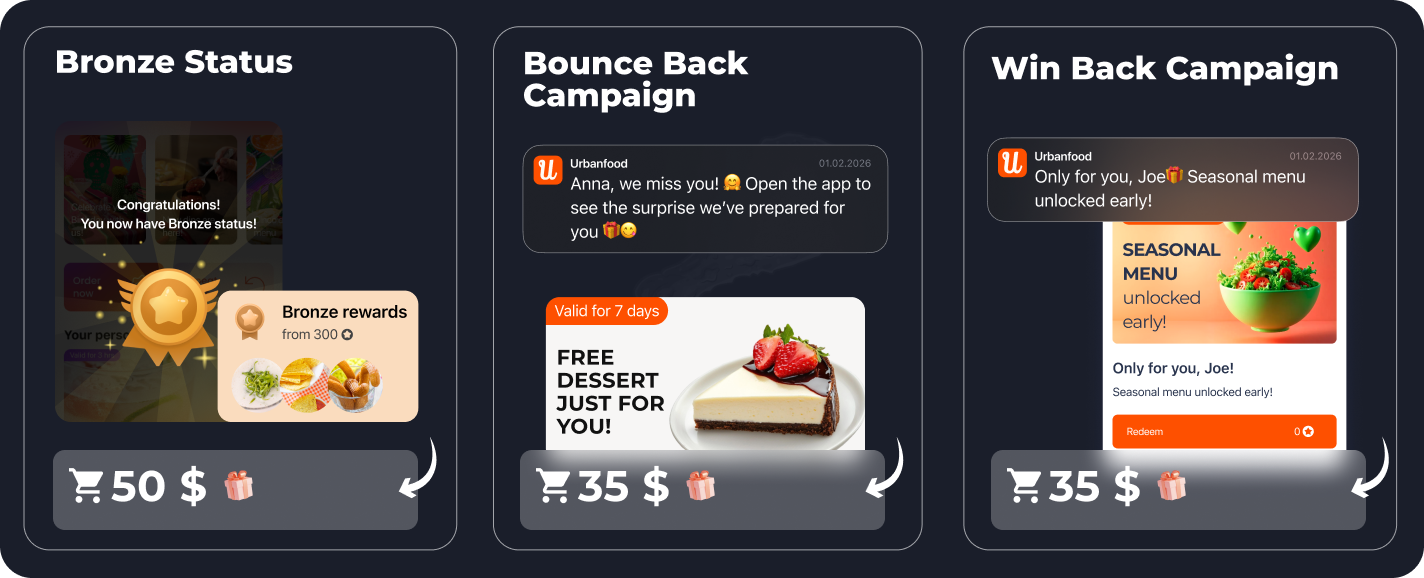
In QSR, churn usually follows a clear pattern: guests visit less often, rewards stay unused, and engagement drops. These signals allow brands to act before the customer fully disengages. At LoyaltyPlant, we build personalization as a simple, structured journey based on these behavioral signals:
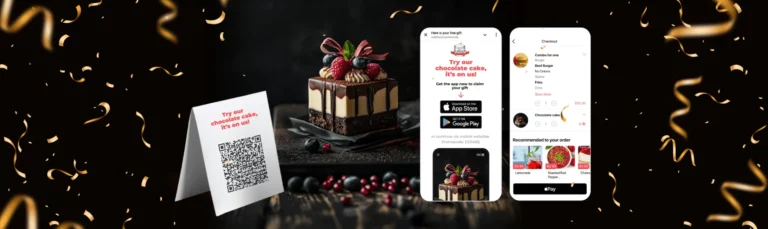
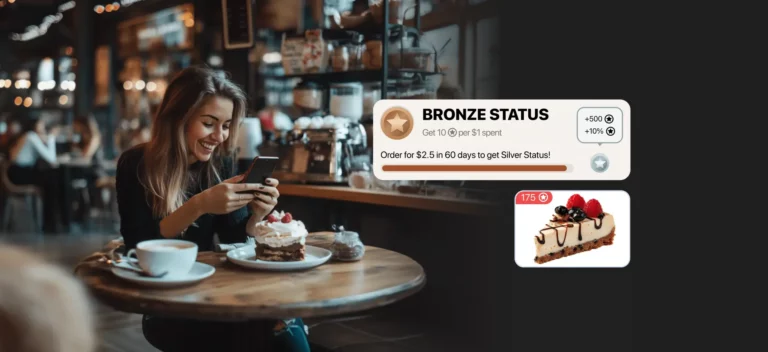
- First purchase → the guest receives a tier status and visible benefits. From the very beginning, loyalty feels like progress, not just a one-time reward.
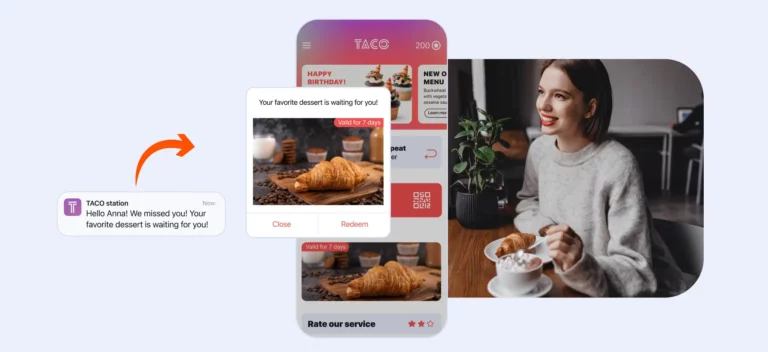
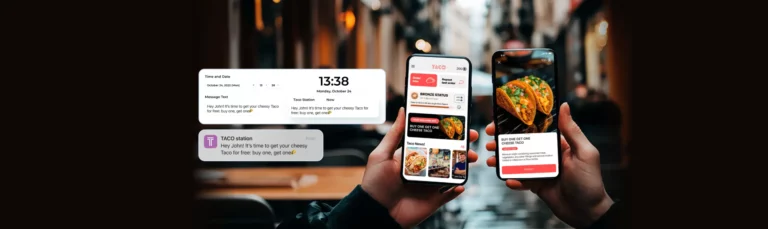
- Status activation → if a repeat visit does not happen within the expected timeframe, automated reminders are triggered to encourage a second order and help build a habit.
- Second purchase → the guest receives a time-limited bounceback reward to motivate another visit soon and keep the momentum going.
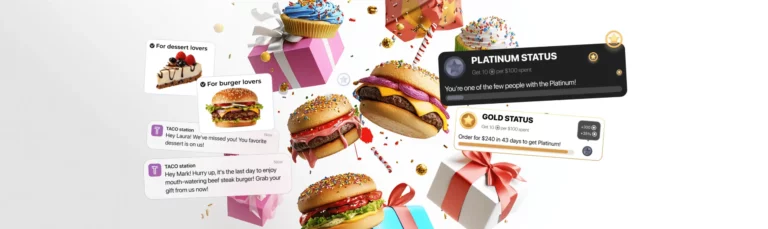
- Seasonal or limited-time menu launch → offers are personalized based on what the guest usually orders. Instead of sending the same promotion to everyone, we tailor incentives to real preferences.
- Declining activity → if visits become less frequent, the guest enters a soft winback flow with a small but relevant reward designed to bring them back without heavy discounting.
AI supports each stage by choosing the most suitable type of incentive — whether it is a product-based offer, bonus points, or a status-related benefit.
This step-by-step behavioral journey turns loyalty into a clear growth system: attract → build habit → maintain momentum → personalize → re-engage when needed.
2. Loyalty must be truly omnichannel and operationally unified
Modern QSR customers interact with brands across many touchpoints: mobile apps, websites, cashiers, kiosks, drive-thru, and aggregators. From a guest’s perspective, this is a single brand experience. From a business perspective, it often becomes a fragmented system landscape.
Loyalty breaks down quickly when data, balances, or rules differ between channels. Customers lose trust when points earned in one place are missing in another or when offers feel inconsistent.
This is why loyalty in 2026 must operate as one ecosystem, not a collection of disconnected tools.
In LoyaltyPlant, loyalty operates as a single unified ecosystem across all touchpoints. Mobile app, website, in-store cashier, self-service kiosks, drive-thru, and delivery channels follow the same loyalty logic, with consistent points, rewards, and offers everywhere.
CRM and analytics are centralized across channels, ensuring unified customer data, segmentation, and campaign rules. Integrations with POS and external services connect the entire system into one coherent structure for both online and offline interactions.
3. Loyalty evolves from transactions to emotional engagement
Transactional loyalty is easy to copy. Emotional loyalty is not.
In 2026, strong QSR brands design programs that create participation, anticipation, and habit formation. Engagement comes from progression, recognition, and unique experiences, not only from earning points.
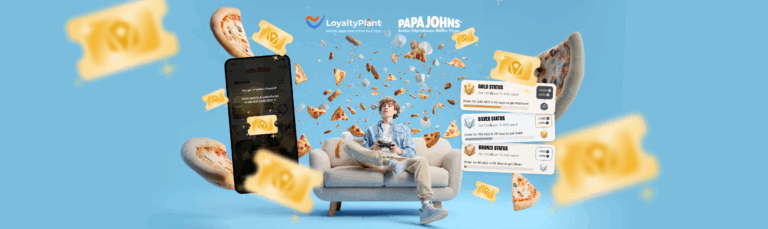
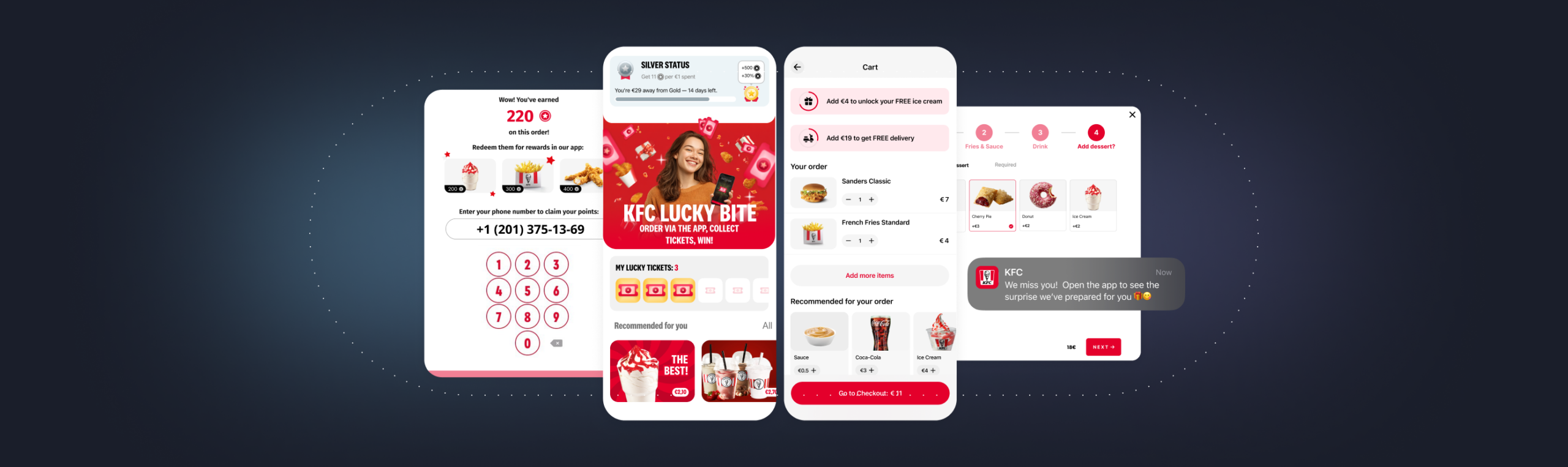
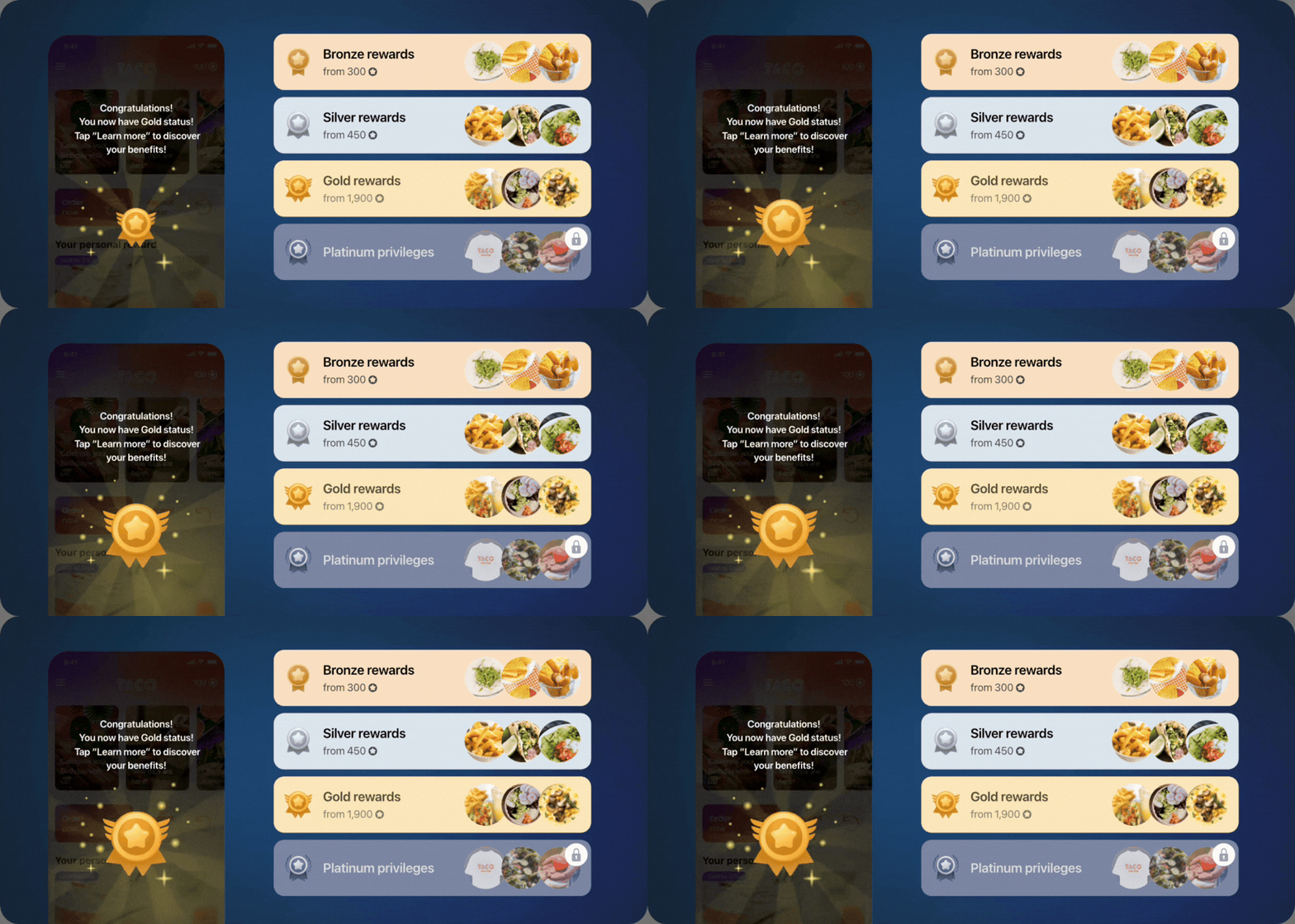
At LoyaltyPlant, we expand loyalty beyond discounts and menu rewards. Alongside our Gamified Tiered Loyalty module and in-app lotteries, we support experiential incentives that go beyond food items. These can include exclusive stickers and limited-edition merchandise, early access to new menu launches, invitations to tasting events, or participation in product presentations.
Dynamic challenges, mini-games, and progression mechanics make loyalty interactive and repeatable, while unique rewards strengthen emotional connection with the brand.
For QSR brands, this type of engagement reduces price sensitivity, increases frequency, and builds long-term brand attachment.
4. Data and AI move from insight to execution
Data has been part of restaurant decision-making for years. What has changed is how quickly it can now be turned into action.
In 2026, advanced QSR brands use data not only to analyze the past but to shape future behavior. Predictive models, automated segmentation, and real-time campaign optimization allow teams to act immediately, not months later.
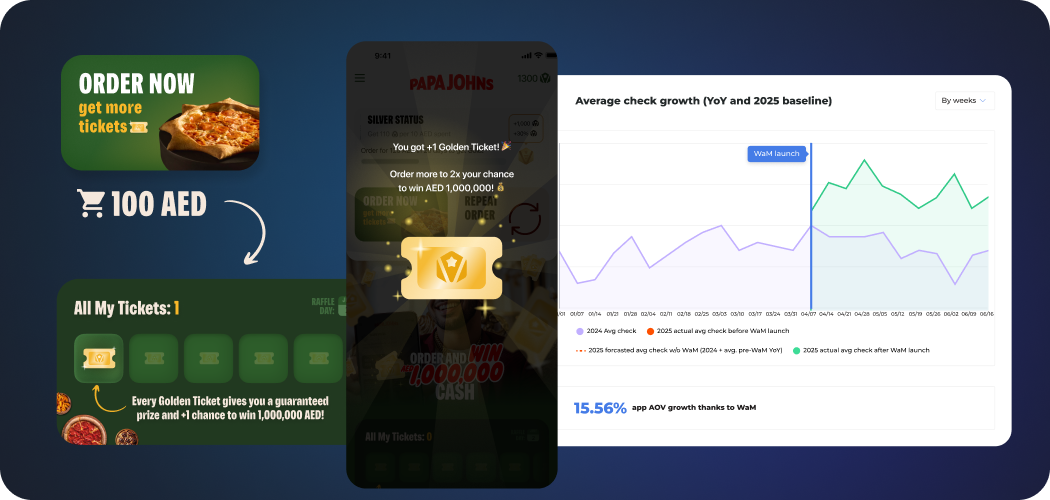
For loyalty programs, this means moving from static reports to continuous experimentation and optimization. Control groups and A/B testing allow brands to measure real uplift, compare incentive types, test timing and mechanics, and understand what truly drives incremental revenue.
LoyaltyPlant supports this shift through an AI-powered marketing engine that adapts campaign logic to user behavior and lifecycle stage in real time. Advanced segmentation, reliable control groups, flexible promotion rules, and survey-driven data enrichment allow brands to personalize offers, protect margins, and continuously improve performance, all within one platform and without slowing operations.
A strong example of this approach in action is shared in insights from the KFC Tech Summit, where LoyaltyPlant demonstrated how data-driven loyalty helps restaurants become digitally advanced market leaders.
5. Loyalty expands beyond the brand into ecosystems and partnerships
Loyalty is no longer limited to purchases inside one brand. Customers interact with restaurants through influencers, lifestyle brands, local events, and digital communities. Modern loyalty programs are starting to reflect this broader ecosystem.
For QSR brands, this means offering value beyond menu rewards. Instead of only earning and redeeming points for food, guests can engage through collaborations with other brands and communities.
Examples:
- Redeem points for a discount at a local fitness studio or cinema
- Earn bonus rewards during a joint campaign with a partner brand
- Get early access to a limited menu created with an influencer
- Participate in a city-wide promotion where several brands are connected through one loyalty mechanic
This approach increases relevance and brings new audiences into the ecosystem without relying only on discounts. The restaurant still remains the central hub where rewards, data, and communication are managed.
In this model, loyalty becomes part of a larger connected ecosystem rather than a standalone program.
Loyalty in 2026 is an ecosystem, not a feature
The future of QSR loyalty is not about offering more discounts. It is about creating systems that understand behavior, connect channels, engage emotionally, and act intelligently on data.
Brands that lead in 2026 will treat loyalty as infrastructure, not a campaign. They will build ecosystems that grow with their customers and adapt as expectations change.
LoyaltyPlant helps QSR brands do exactly that by combining personalization, omnichannel consistency, engagement mechanics, and advanced analytics into one flexible platform.
Ready to build loyalty that works in 2026?
If you are looking to transform loyalty into a real growth engine for your restaurant brand, book a demo with LoyaltyPlant and see how future-ready loyalty works in practice.