How to choose a restaurant loyalty platform: 7 criteria for 2027
Choosing a restaurant loyalty platform is a multi-year decision. Here are 7 criteria and the questions to ask every vendor before you sign.

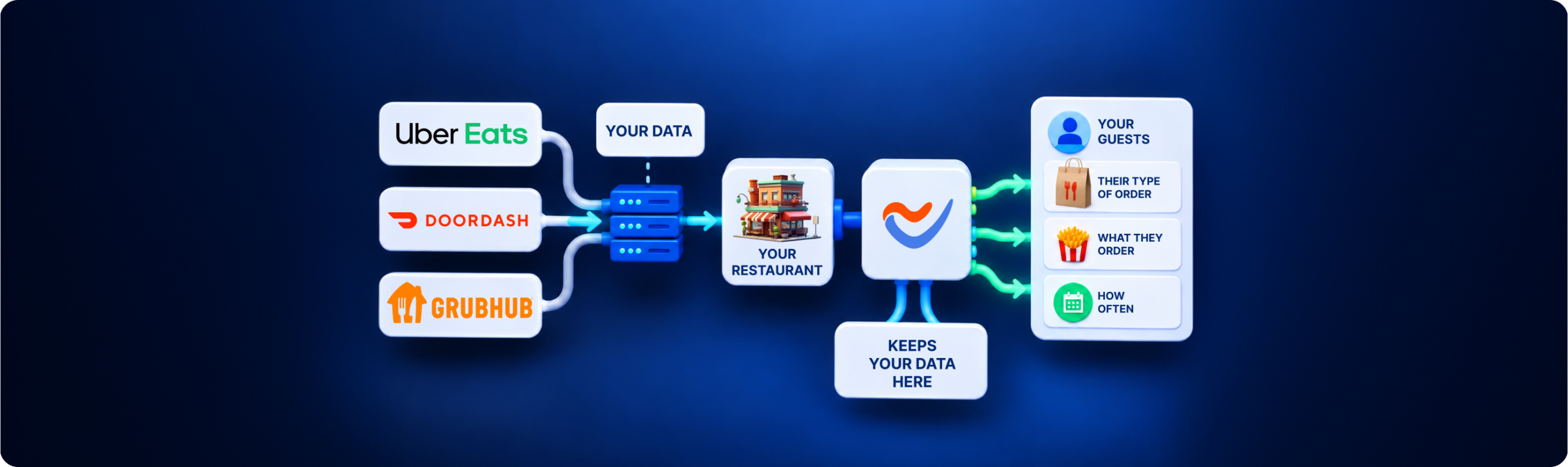
In the UAE, more than 90% of online restaurant sales went through delivery aggregators. For Papa Johns, this meant relying heavily on third-party platforms that owned the guest relationship, the data, and a share of every order.
So the brand built its own direct channel: a branded app with a gamified loyalty program inside. The app gave guests a place to order directly. The loyalty program gave them a reason to come back. Annual sales doubled within two years of the app launch.
That is what a restaurant loyalty platform really does. It is not just points. It is the system behind your own app, your ordering, and your guest relationship. With one in three diners switching favorite QSR brands in a year (PYMNTS), choosing that system is one of the biggest decisions a chain makes.
Here are seven criteria to check before you sign. They follow the order of a real evaluation: first the vendor, then the product, then the results.
1. A proven track record with restaurant brands
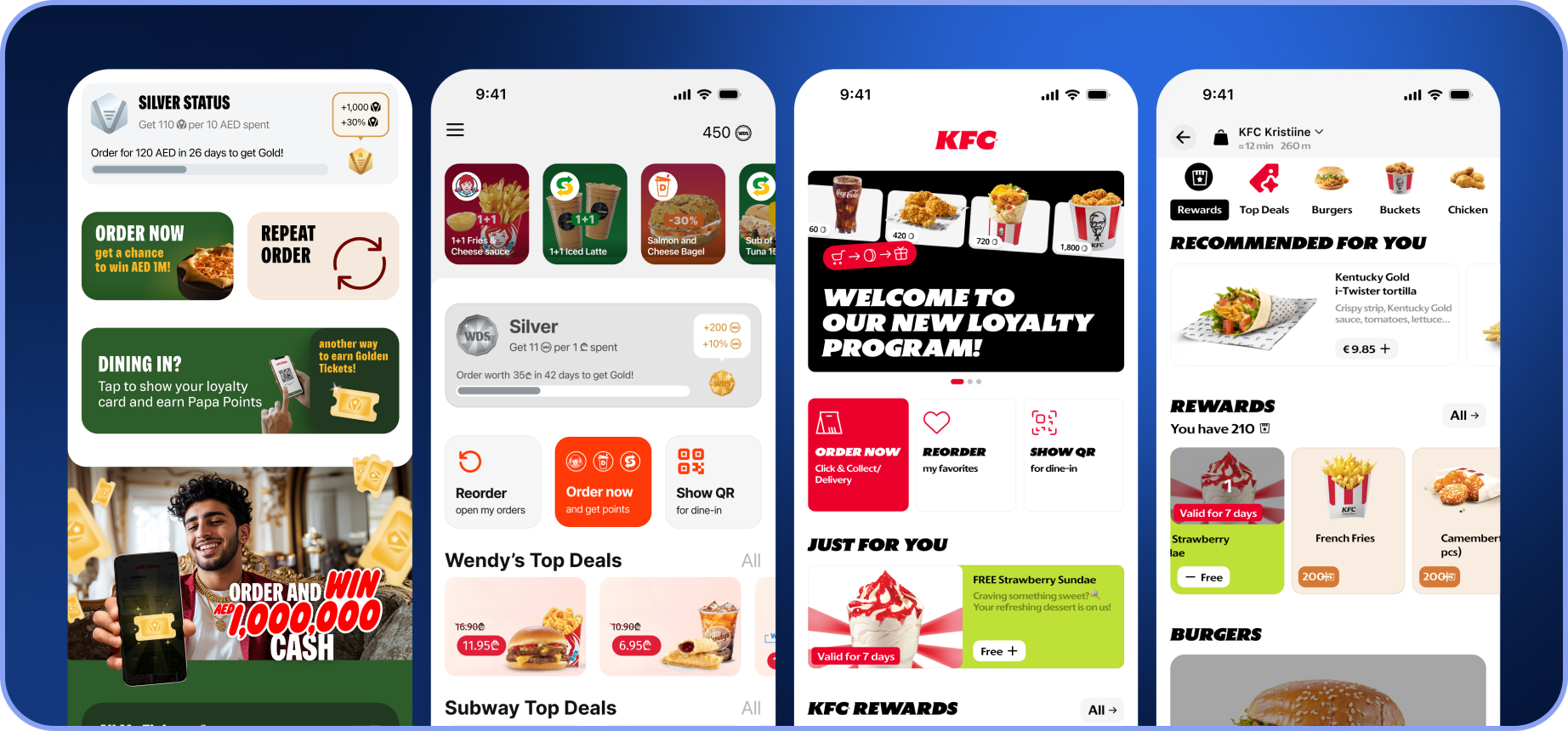
Start with the vendor, not the features. Most restaurant loyalty platforms look good in a demo. A track record shows what a platform has already done for brands like yours.
- Measurable results: documented impact at restaurant chains, such as a large share of sales coming through the brand’s own app and website
- Experience with leading QSR brands, ideally in competitive markets where guests have many options
- Proof you can verify: public case studies, industry awards, and reference clients you can call
Questions to ask: Can you share case studies with measurable, client-verified results? How were those results measured, and can we speak directly with a reference client?
2. One guest profile that you own
Once you trust the vendor, look at the product. The first test: does it see your guest as one person, and does that person belong to you?
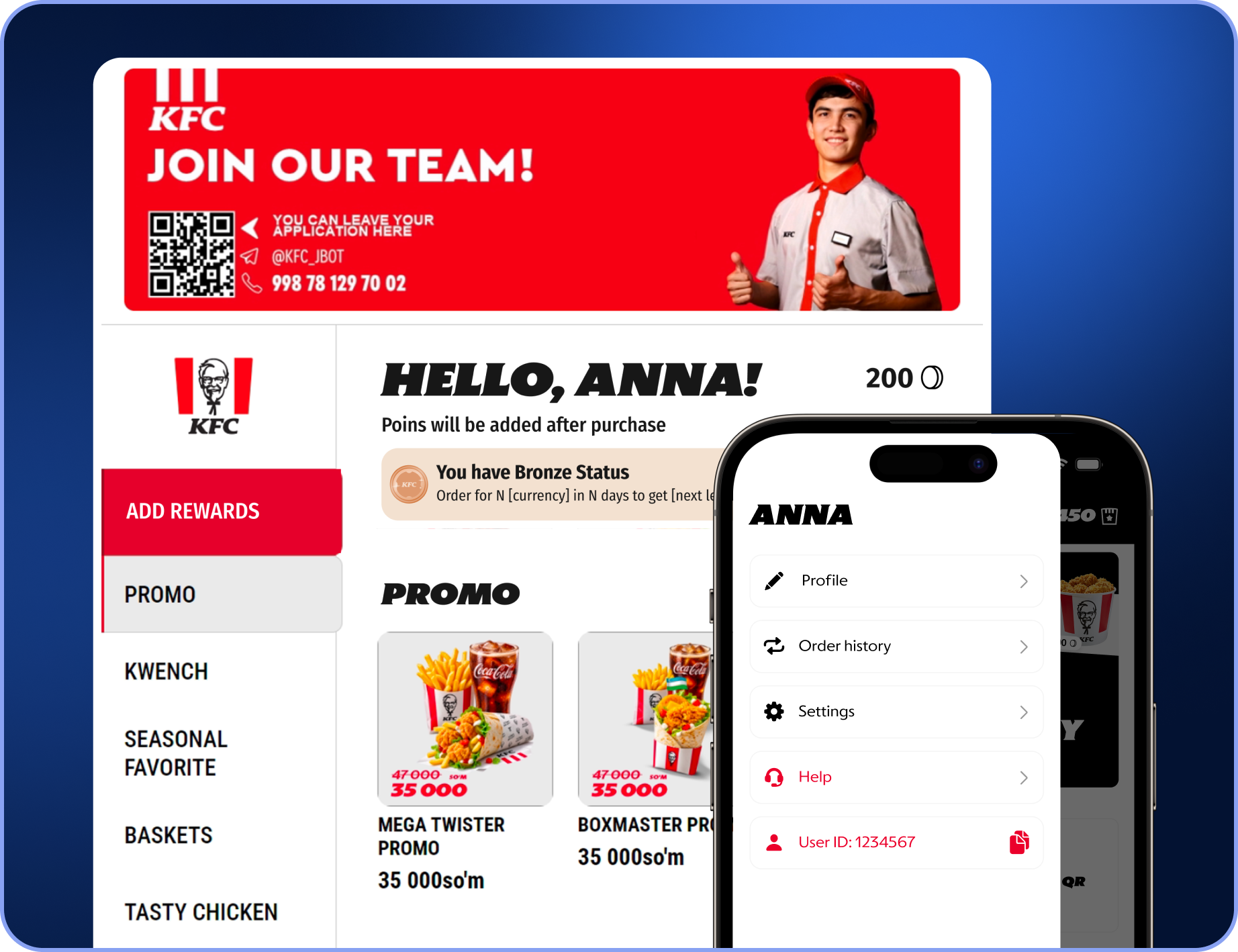
A guest who orders on your website, visits a store, and opens your app should be one profile with one history, not three strangers in three systems. That is the main advantage of an all-in-one loyalty platform over separate tools, and the basis for personalization, fair rewards, and accurate reporting.
That profile is your most valuable asset. Aggregators keep the data from every order they handle. Your own app wins it back. You should be able to export all your guest data at any time, and bring existing members and points with you when you switch.
Questions to ask: Do all channels, including app, ordering, loyalty, and CRM, use one unified guest profile rather than separate profiles for each channel? Can we export all our customer data at any time? Can you migrate our existing members, points, and loyalty data from our current solution to the new platform?
3. Gamification across the entire guest experience
A unified profile tells you who your guests are. Gamification gives them a reason to come back.
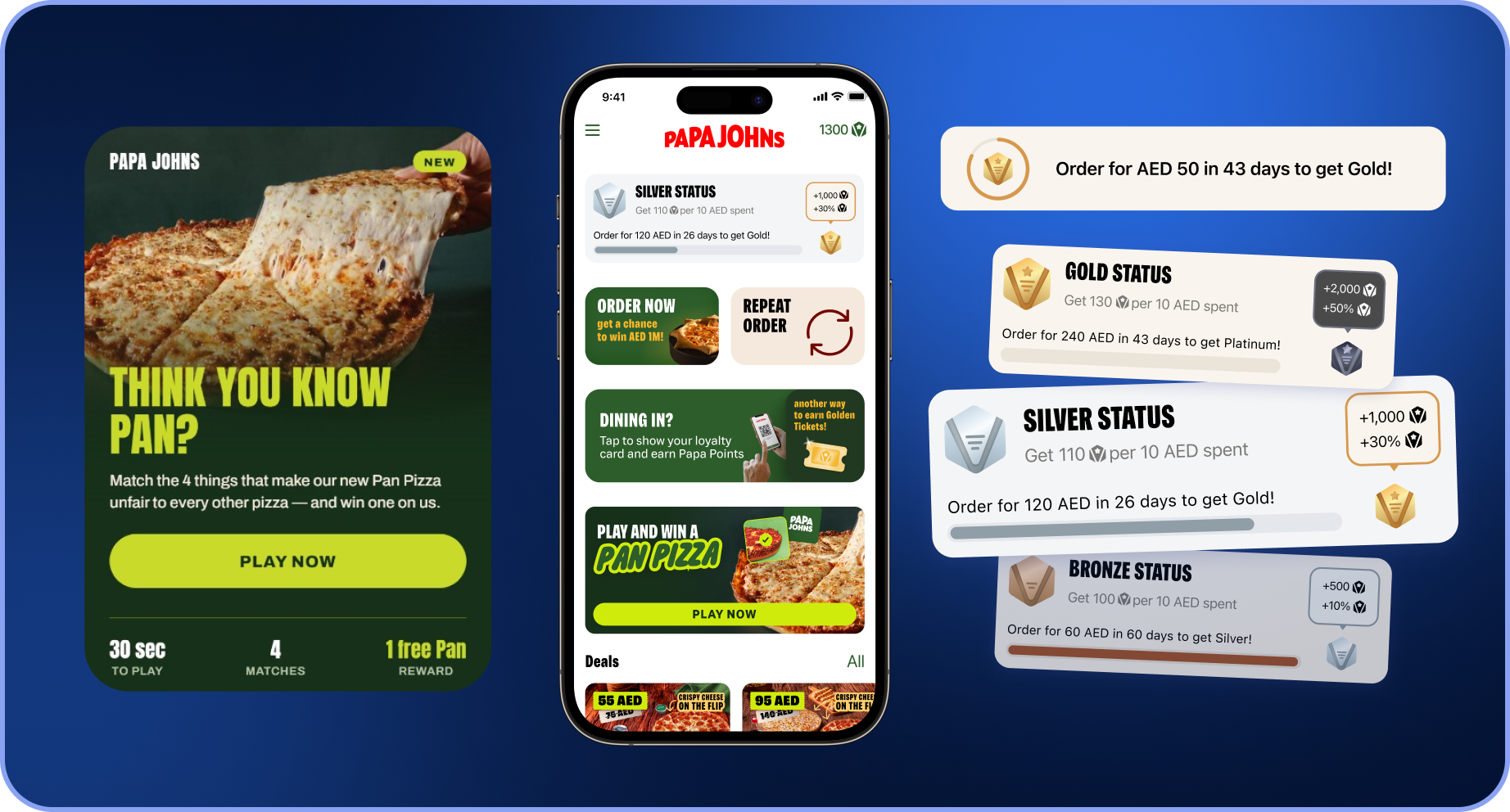
Points-only programs are easy to launch and easy to ignore. If your program is just another discount, you are competing on price. The strongest programs build gamification into every step of the app, not one feature hidden in a menu:
Tiers and progress bars that guests want to reach and do not want to lose
Missions, mini-games, and seasonal events that give guests a reason to open the app without a discount
Referral rewards that turn fans into ambassadors
This matters most for younger guests. In Euromonitor’s Voice of the Consumer: Loyalty Survey, 27% of Gen Z said loyalty programs are “not fun.” For this generation, a program has to feel like a game, not a coupon book.
Questions to ask: Is gamification built into the whole app?
4. POS integration and tech-stack flexibility
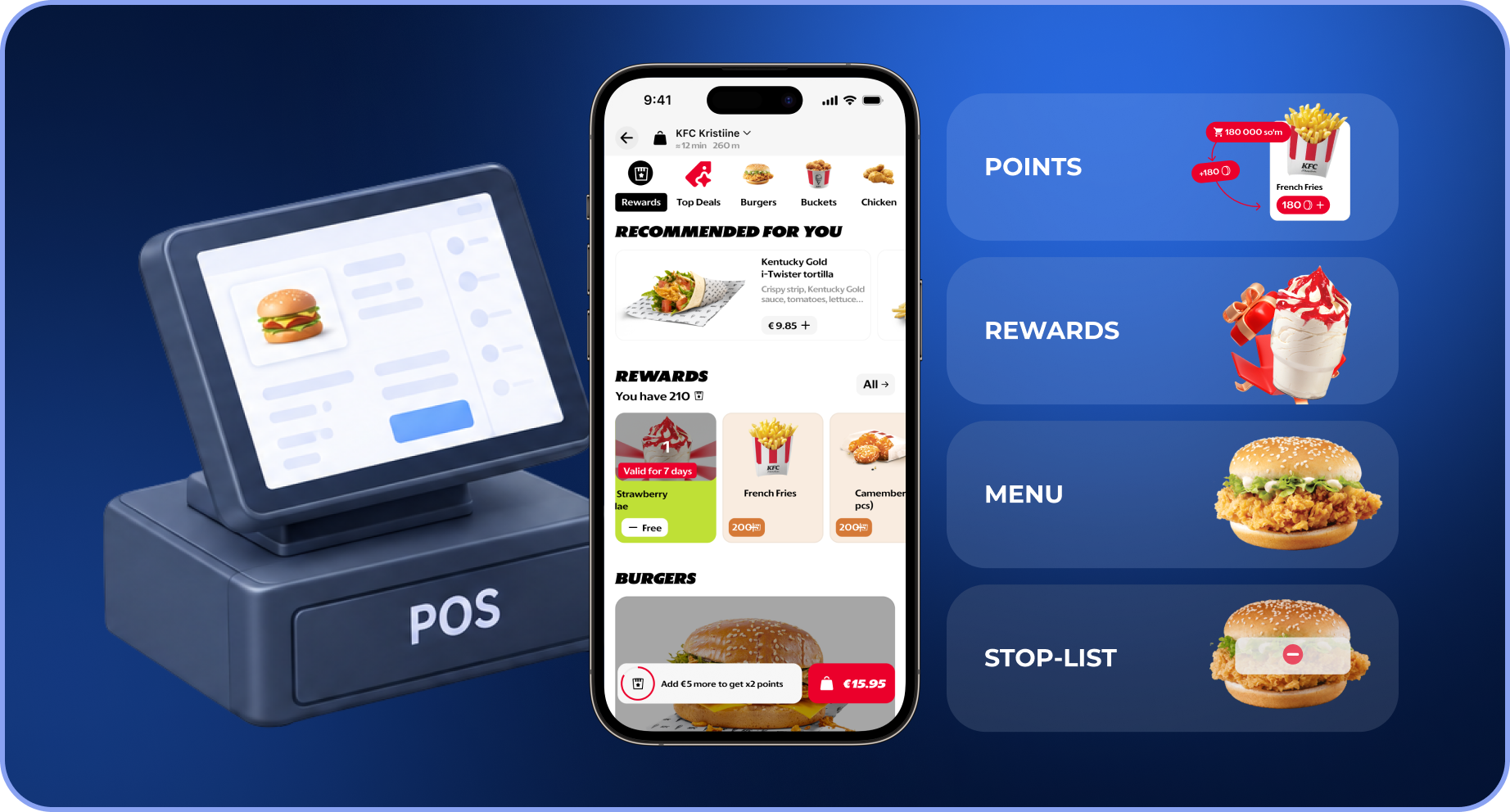
Even the best guest experience fails if it does not work in your stores. Your loyalty platform must connect with your point-of-sale (POS) system: points, rewards, menus, and stop-lists all depend on it.
But do not rule out a vendor just because your POS is not on its list yet. Good platforms keep adding integrations, and you may become the first client with yours. What matters is flexibility: open APIs and a team ready to build new connections.
Questions to ask: Which POS, payment, and delivery systems do you support? If ours is missing, can you build the integration?
5. Franchise and multi-location readiness
A platform that works for one store must also work for a hundred. A franchise network has two customers inside one platform. Headquarters needs brand consistency and network-wide reporting. Franchisees need local offers and proof that the program brings guests to their store.
The platform should support both. One location may need its own menu, its own stop-list, or an age check for alcohol. Flexible access levels let regional teams update their own menus and offers within the limits HQ sets, in every language the network uses.
Questions to ask: Can each location have its own menu, promotions, and reporting? Does the platform support all the languages you need, including right-to-left languages?
6. Ongoing support and a dedicated Customer Success manager
With the product checked, look at the team behind it. Software alone does not grow sales. What grows sales is how you use it: which campaigns you run, when, and for which guests.
Look for a dedicated Customer Success manager who knows your brand and KPIs, a partner rather than a ticket queue, who:
- reviews your numbers and tells you what to improve
- plans campaigns together with your marketing team
- trains franchisees and store teams
Support should cover guests, store staff, franchisees, and head office, 24/7, under a written SLA. Strong vendors also monitor every order in real time and fix failures before guests notice.
Questions to ask: Will we have a dedicated Customer Success manager?
7. Transparent ROI measurement, visible in the CRM
The last test brings everything together: can you prove it works? Sign-ups look good in a report, but they do not prove revenue. You need to see what each campaign actually earned.
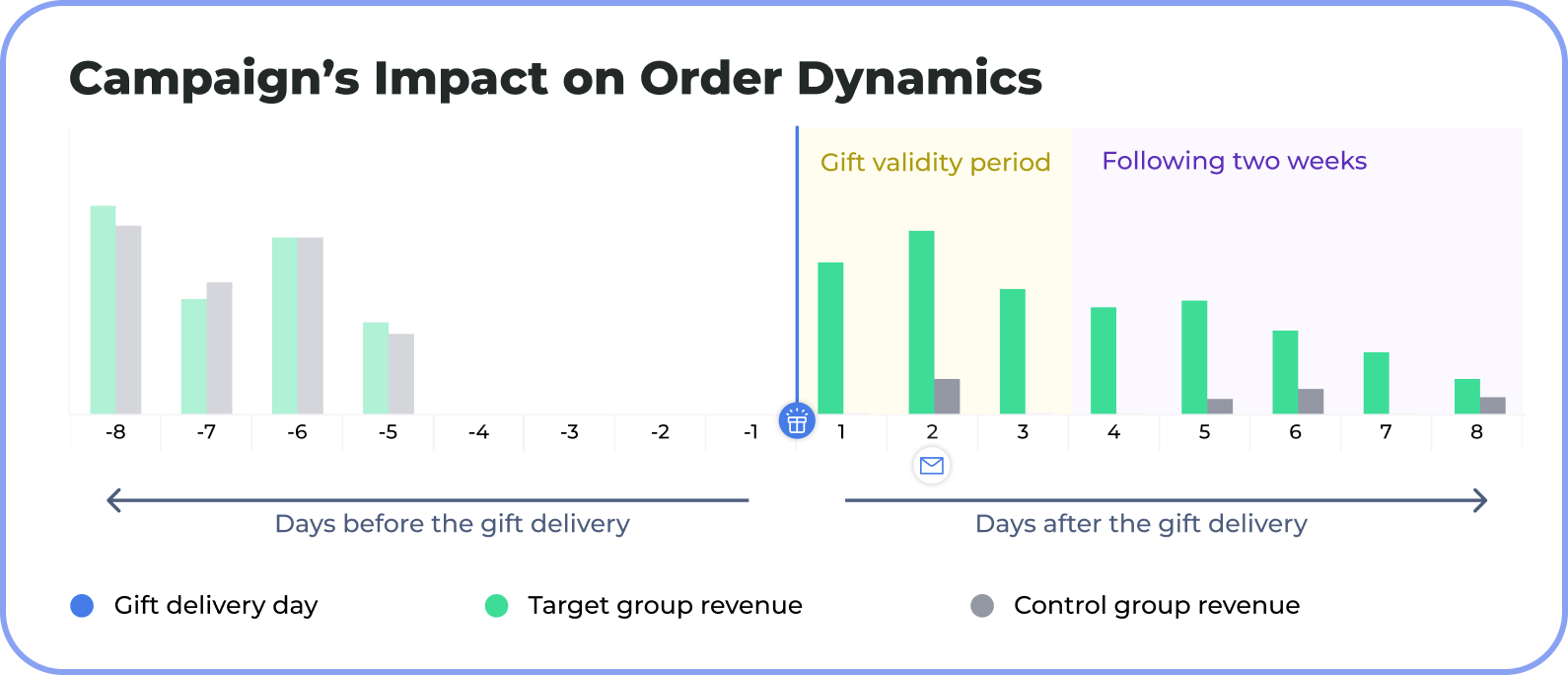
- Control groups: send an offer to about 80% of the audience, hold back 20%, and compare spending. The difference is the real result, including whether guests keep ordering after the campaign ends.
- A/B tests: compare two offers, messages, or timings to see which works better.
- Cohort metrics: active members, visit frequency, retention, and average check for members vs. non-members.
All of this should be visible directly in the CRM, in real time. Then any colleague, from the CMO to a regional manager, can open a campaign and see whether it worked.
Questions to ask: Which ROI methods does the platform support? Can every team member see the results without asking an analyst?
Loyalty program vendor evaluation: 7 questions for every demo
Use this list for any restaurant loyalty software comparison. Bring these questions to every call and score each vendor from 1 to 5, one score per criterion.
- Can you show documented results from restaurant brands like ours?
- Do the app, ordering, loyalty, and CRM share one guest profile, and can we export all of our data?
- Is gamification built into the whole app, and can marketing launch new mechanics without developers?
- Which POS systems do you support, and can you build a new integration if ours is missing?
- Can each location have its own menu, offers, and reports?
- Will we have a dedicated Customer Success manager and a written SLA?
- Which ROI methods do you support, and are results visible in the CRM?
How LoyaltyPlant meets these criteria
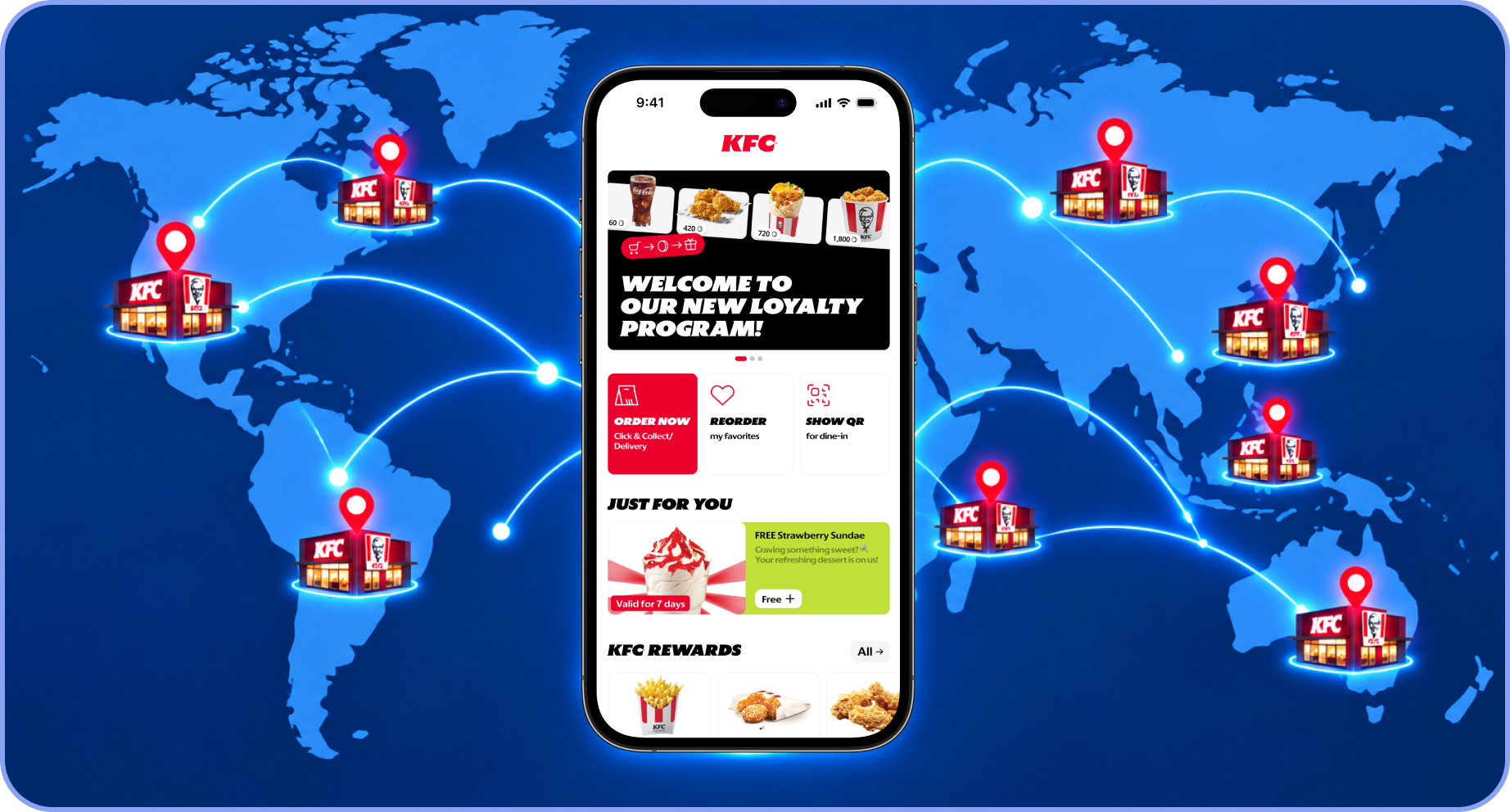
LoyaltyPlant is an e-commerce and digital customer engagement platform for restaurant chains. Founded in 2016 in New York, we have delivered 600+ projects across 35+ countries, working with brands like KFC, Papa Johns, Wendy’s, Subway, and Dunkin’.
The platform combines a branded mobile app and ordering website, a loyalty and gamification engine, and a CRM with AI-powered marketing. Each client also gets a dedicated growth team focused on its business KPIs.
| Criterion | How LoyaltyPlant delivers |
|---|---|
| Track record | 600+ projects in 35+ countries; standardized rollout across 10+ Papa Johns markets |
| One guest profile you own | App, website, ordering, loyalty, CRM, and campaigns share one guest account; data stays in the brand's own CRM; GDPR, ADA, and PCI DSS compliant |
| Gamification | Dynamic tiers, missions, badges, mini-games, lotteries, and referrals; ordering and earning without registration |
| POS and tech stack | Toast, Square, Clover, Revel, Syrve, POSist, R-Keeper, and more; open APIs; works without a POS |
| Franchise readiness | Menus and stop-lists per store, flexible access levels, multi-language (including Arabic), and multi-brand apps |
| Customer success and support | Dedicated growth team; real-time monitoring and 24/7 support for guests, staff, franchisees, and HQ |
| ROI measurement | Control groups, A/B tests, and incremental profit, visible in real time in the CRM |
LoyaltyPlant is the strongest fit for QSR and fast-casual chains and multi-country franchises that want to own the guest relationship. A single restaurant that only needs a digital punch card will likely find a simpler tool more cost-effective.
Choose the platform you will not have to replace
A loyalty platform is not a one-year purchase. Once guests download your app and collect points, switching costs you members, data, and momentum. The wrong choice keeps you renting your guests from aggregators. The right one lets you own the relationship, the way Papa Johns did in the UAE.
Bring this checklist to a 20-minute walkthrough with our team. Book your demo and see, criterion by criterion, how LoyaltyPlant would work for your chain.